How to Read a Nutrition Label
Nutrition Knowledge = Better Choices
Understanding a nutrition label is one of the most important skills you can learn on your health journey. Food labels provide valuable information that can help you make informed decisions about what you’re putting into your body.
At Da Fit Gang, we believe that education leads to empowerment. The more you understand about your food, the better equipped you are to reach your health and fitness goals.
1. Ingredients List (Start Here)
This is one of the most important sections on the entire package.
Ingredients are listed in order from the highest amount to the lowest amount.
Ask Yourself:
- Can I recognize most of these ingredients?
- Are whole foods listed near the top?
- Is sugar/sodium listed multiple times under different names?
Da Fit Gang Rule:
The shorter and simpler the ingredient list, the better.
2. Serving Size: (Very Important)
The serving size tells you how much of the food all the nutrition information is based on.
Many people make the mistake of looking only at the protein and ignoring the serving size.
Example:
- Serving Size = 5 oz
- Servings Per Container = 4
If you eat the entire package, you must multiply all the nutrition values by 4.
Why It Matters
The serving size determines:
- Calories
- Fat
- Carbohydrates
- Protein
- Sodium
- Sugar
Everything starts with the serving size.
3. Calories: Your Energy Source
Calories provide the energy your body needs to function.
When reviewing calories, always compare them to the serving size.
Remember:
Calories are not “good” or “bad.”
The quality of those calories matters just as much as the quantity.
Choose foods that provide nutrients, vitamins, minerals, fiber, and protein rather than foods that only provide calories.
4. Total Fat
Pay Attention To:
- Saturated Fat
- Trans Fat
- Total Fat
Fat is an essential nutrient that helps support:
Da Fit Gang Tip:
Limit trans fats whenever possible and focus on healthy fat sources such as nuts, seeds, avocados, and olive oil.
5. Cholesterol
Cholesterol is found primarily in animal-based foods.
While cholesterol recommendations have evolved over the years, it’s still important to be aware of your intake and discuss any concerns with your healthcare provider if you have specific health conditions.
6. Sodium
Sodium helps regulate fluid balance and muscle function.
However, excessive sodium intake can contribute to health concerns for some individuals. The lower the sodium the better for your overall health
Da Fit Gang Tip:
Compare similar products and choose options with lower sodium when possible.
7. Total Carbohydrates
Carbohydrates are your body’s preferred source of energy.
This section includes:
- Dietary Fiber
- Total Sugars
- Added Sugars
What to Focus On:
Look for foods that provide fiber and limit foods with excessive added sugars.
8. Dietary Fiber
Fiber is one of the most important nutrients for overall health.
Benefits include:
Da Fit Gang Tip:
The higher the fiber content, the better. Aim to include fiber-rich foods at every meal.
9. Sugars
Not all sugars are created equal.
Natural sugars found in fruits and dairy products are different from added sugars found in processed foods.
Watch For:
- High Fructose Corn Syrup
- Corn Syrup
- Cane Sugar
- Brown Sugar
- Dextrose
- Maltose
- Anything with ’ose’ at the end means sugar is in the product, regardless of what the front label says
The lower the added sugar, the better.
10. Protein
Protein is essential for:
For most active individuals, protein should be a priority at every meal.
Da Fit Gang Tip:
When comparing products, choose options that provide a higher amount of protein while keeping added sugars lower.
11. Vitamins & Minerals
Many labels include important nutrients such as:
- Vitamin A
- Vitamin C
- Vitamin D
- Calcium
- Iron
- Potassium
These nutrients support overall health and proper body function.
Look for foods that provide a good percentage of your daily needs.
12. % Daily Value (%DV)
The % Daily Value helps you determine whether a food is low or high in a specific nutrient.
Quick Guide:
- 5% or less = Low
- 20% or more = High
Use this section to compare products and identify foods that are rich in beneficial nutrients.
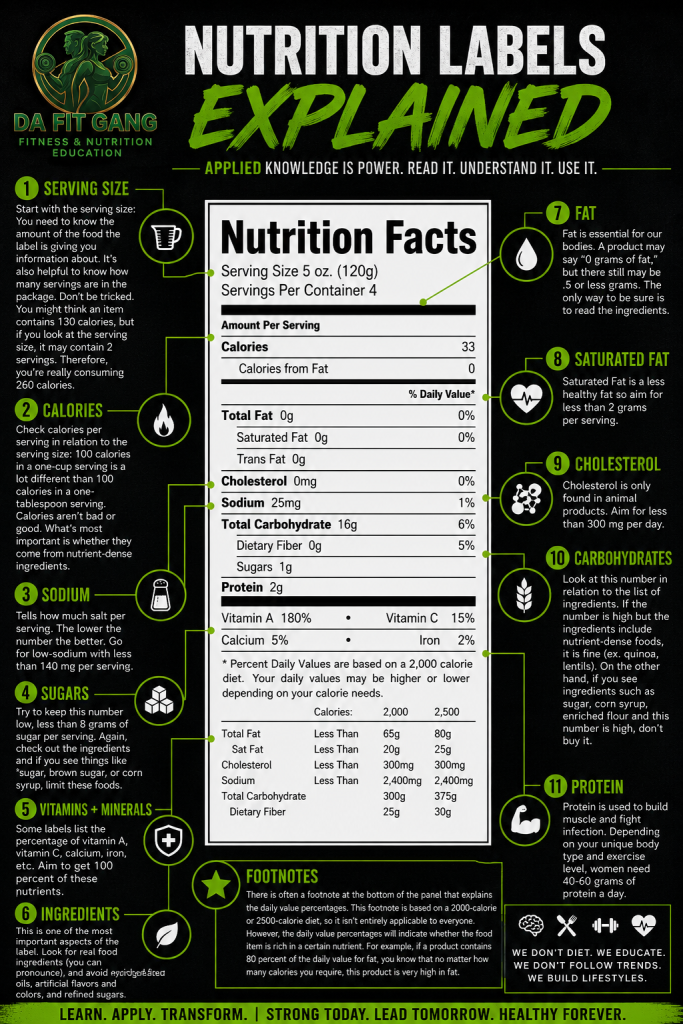
Da Fit Gang Label Reading Checklist
Before you put a product in your cart, ask yourself:
Final Thought
Reading a nutrition label isn’t about perfection—it’s about awareness.
The more you understand what’s in your food, the more control you have over your health, performance, and future.
Learn. Apply. Transform.
Da Fit Gang believes nutrition education is the foundation of lifelong success.